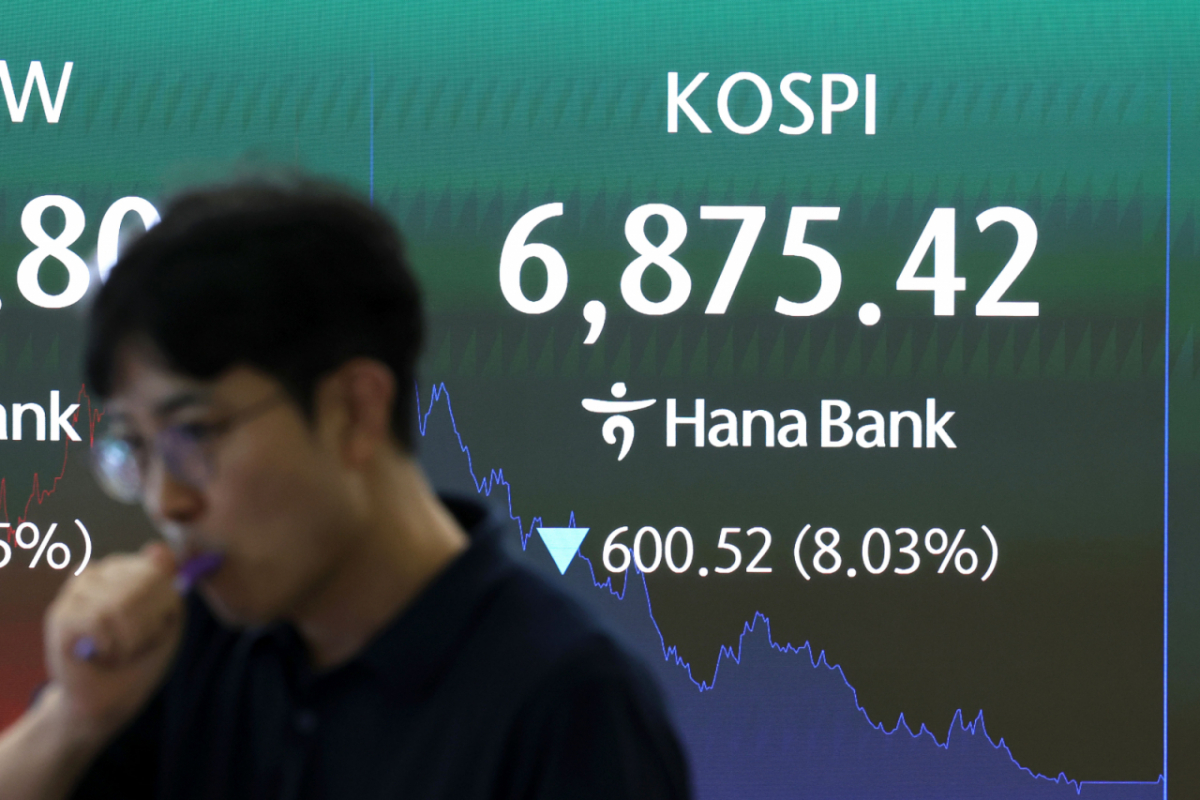
KOSPI Down 7%: 6 Checks Before You Sell Korean Stocks
A Korean headline saying the KOSPI is down more than 7% can push you toward a rushed trade—especially when it claims investors’ accounts are “melting.” If Korean is not your first language, expressions such as 삼전닉스 and 순매도 can make the situation even harder to judge. This guide will help foreign residents separate the reported numbers from the emotional wording before touching the buy or sell button.
Quick answer: "계좌가 녹고 있어요"...삼전닉스 급락, 코스피 -7%대 '패닉' matters if it affects your study, travel, work, or daily-life plans in Korea. Use it to understand the practical meaning first, then compare the key details with the original article before acting.
Direct answer
A MoneyToday article dated July 13, 2026 described an intraday KOSPI decline in the 7% range, with foreign investors net selling KRW 2.2483 trillion. Because the figures described trading in progress, first compare the article’s timestamp with the latest market information and your actual holdings. The headline alone is not a reason to sell.
- “삼전닉스” is not a stock: It combines Samsung Electronics and SK Hynix.
- The reported 7% decline was intraday: It was not presented as a final closing result.
- Broad index losses are not portfolio losses: Your stocks may have moved by different amounts.
What the 7% KOSPI headline actually said
The Korean headline used the phrase “계좌가 녹고 있어요”, which literally means “my account is melting.” It is an emotional way to describe a rapidly falling portfolio, not a technical market term.
The article also said 삼전닉스 급락. Here, 삼전 is shorthand for Samsung Electronics, while 닉스 comes from SK Hynix. Korean financial headlines often combine shortened company names to save space.
This is easy to misread through automatic translation. There is no listed company, fund, or index called “Samjeon-nix.” If you own either company, search for Samsung Electronics and SK Hynix separately in your brokerage account.
How much selling did the report describe?
The article attributed heavy net selling to both foreign and institutional investors. Foreign investors were reported as net sellers of KRW 2.2483 trillion, while institutions net sold KRW 572.7 billion.
Foreign investors: KRW 2.2483 trillion net sold
Institutions: KRW 572.7 billion net sold
Comparison based on the investor-group amounts reported by MoneyToday on July 13, 2026. The bars compare net selling, not total trading volume.
In other words, reported foreign-investor net selling was about 3.9 times the institutional amount. But net selling does not mean every foreign investor sold. It means the total value sold by that market category exceeded the total value purchased during the measured period.
It also does not mean foreigners living in Korea are expected to sell. In Korean market coverage, “foreign investors” is a trading classification—not a recommendation for individual foreign residents.
Use this table before reacting to the headline
The most important question is not whether the headline sounds frightening. It is whether each number describes the index, a sector, one company, or your own account.
| Reported detail | What it describes | What to do next |
|---|---|---|
| KOSPI down in the 7% range | A broad intraday index movement | Look for the latest index level and whether the market has closed. |
| KRW 2.2483 trillion net sold | Combined foreign-investor activity | Do not treat it as an instruction for your personal account. |
| KRW 572.7 billion net sold | Combined institutional activity | Use it as market context, not as a prediction of the next session. |
| Transport, warehousing, and real estate down more than 1% | Stock-market sectors | Do not interpret the real estate figure as a change in Korean home prices. |
| Pharmaceuticals slightly lower; chemicals slightly higher | Different sector movements | Review each holding instead of assuming every stock fell by 7%. |
Six checks to make before placing an order
If prices are moving quickly, use the same sequence every time. It reduces the chance that a translated headline or an old screenshot becomes the basis for a financial decision.
-
Read the publication time.
Find out whether the percentage is live, delayed, intraday, or the official closing figure. The July 13 article described trading while it was still underway.
-
Identify what fell.
A KOSPI decline describes the index. A sector decline describes a group of listed companies. Neither tells you the exact movement of every stock.
-
Open your holdings one by one.
Compare the headline with the latest displayed price for each company you own. Samsung Electronics, SK Hynix, and unrelated stocks can move by different percentages.
-
Read the order type before submitting.
Make sure you know whether the screen shows a market order or a limit order. This matters more when prices are changing quickly.
-
Separate stock movement from currency movement.
If you measure your savings in another currency, changes in the Korean won can affect your result separately from the share price.
-
Translate the numbers, not only the headline.
Korean units can look deceptively small or large. One 억원 is KRW 100 million, while one 조원 is KRW 1 trillion.
That sounds basic, but it can matter when Korean financial vocabulary is not your first language. If you are short on time, start with the timestamp, your current quote, and the order type.
Why the 1% real estate figure is easy to misunderstand
The report said the real estate stock-market sector was down by more than 1%, alongside transport and warehousing. It did not say Korean apartment prices, rental deposits, or housing transaction values fell by the same amount.
In financial coverage, 부동산 can refer to a category of listed companies. That is different from statistics about Seoul apartments, nationwide home prices, jeonse deposits, or foreign property purchases.
If your real question is about housing, do not use this stock-sector percentage. Search specifically for Korean housing transaction data or the property policy that affects your situation.
Korean terms that change how you read the story
| Korean term | Plain-English meaning | How to interpret it |
|---|---|---|
| 계좌가 녹고 있어요 | “My account is melting” | Emotional language for falling portfolio value |
| 삼전닉스 | Samsung Electronics and SK Hynix | Two companies grouped into one informal nickname |
| 급락 | Sharp decline or plunge | Look for the actual percentage and time period |
| 순매도 | Net selling | Sales exceeded purchases for that investor group |
| 약보합 | Slightly lower or nearly flat | A small negative movement |
| 강보합 | Slightly higher or nearly flat | A small positive movement |
What this report cannot decide for you
The article provides a dated snapshot of the Korean market, not personalized financial advice or a forecast for the next trading session. It also does not show how every listed company performed or how much any individual investor gained or lost.
Before making a financial decision, compare the article’s timestamp with current Korea Exchange information and the quote displayed by your brokerage. Treat words such as “panic” and “melting” as descriptions of mood—not as indicators that automatically tell you when to buy or sell.
FAQ
Was the KOSPI reported down exactly 7%?
No. The headline described a decline in the 7% range. It did not provide a precise final closing percentage in the details available here.
Should foreign residents sell because foreign investors were net sellers?
No. “Foreign investors” describes a market trading category. Compare the current market price, your holdings, and your own plan rather than copying the combined activity of that category.
Can I search for 삼전닉스 in my brokerage app?
Do not expect it to appear as a separate security. Search for Samsung Electronics and SK Hynix individually.
Did the report say Korean home prices fell by more than 1%?
No. The figure concerned a real estate category within the stock market, not apartment prices or housing transactions.
What should I look at first if the market is still open?
Start with the article’s time, the latest KOSPI level, and the current quote for each holding. Then read the order type before submitting anything.
Where the figures came from
The date, headline, investor net-selling amounts, and sector movements in this guide come from a MoneyToday market article published on July 13, 2026 and carried through Naver News. Those details support an explanation of what the article reported at that time.
MoneyToday is the publisher of the news report, while current prices and final market results should be compared with Korea Exchange information or your brokerage display. Do not make a later investment decision using the article’s intraday figures as though they were live prices.
- Read the original MoneyToday article about the KOSPI decline
- Open the Korean report on Naver News
- Related guide: Why “foreigners took profits” can mislead foreign residents
Before you tap buy or sell
A 7% KOSPI headline deserves attention, but it should not make the decision for you. First establish whether the number is intraday, translate the shorthand correctly, and compare the broad index with the stocks you actually own.
Do this now: Save the six-step checklist, open the original article to note its timestamp, and compare it with the latest quote and order type shown in your brokerage account.
