Gongju Student Program in 2026: How International Students Can Find the Next Intake Before It Starts
Gongju Student Program in 2026: How International Students Can Find the Next Intake Before It Starts
International students in Korea can use Gongju’s summer learning support program as a practical model for finding city-linked activities beyond campus.
Quick answer: 충남 공주시, 여름방학 대학생 학습지원단 발대식 개최 matters if you study in Korea and want local programs beyond your own campus. Use it to understand what the program could mean for students, then compare the program name, place, date, and participation rules in the original article or local notice.
Many international students hear about community programs only after participants have already been selected. The notice may appear only in Korean, sit on a city website, or use an unfamiliar term such as 학습지원단.
That appears to be the situation with Gongju’s 2026 summer university student learning support team. Its launch ceremony has already taken place, but the program reveals what to search for—and when to start searching—if you want to find a similar activity during a future school vacation.
This guide explains what the Gongju program involves, why its international component matters, and how to look for the next city or university intake before you miss it.
Direct answer
Gongju City held a launch ceremony for a summer learning support team made up of university students. Participants support local children, and the 2026 program also aims to expand global education and give international students opportunities to experience Korean culture. Because the ceremony marks the start of activities, use this program as a search model for future recruitment rather than assuming the current round is still accepting applications.
- Who should pay attention: International students seeking community or cultural activities outside class
- What to search: 대학생 학습지원단, 외국인 유학생 프로그램, and 참여자 모집
- Best next step: Search your university and local city noticeboards before the next vacation period
What is the Gongju summer learning support team?
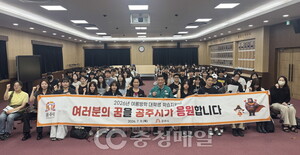
Gongju City, written as 공주시 in Korean, organized a university student learning support team for the summer vacation period. According to a Korean article published on July 12, 2026, the city held a formal launch ceremony for the group.
The participating university students support children in the local community. Gongju Mayor Choi Won-cheol thanked them for contributing their time while also managing their studies and employment preparation.
The detail international students should notice is the program’s broader educational focus. This year’s plan aims to expand global education opportunities and provide foreign university students with Korean cultural experiences.
This is more specific than a general invitation to a festival or sightseeing event. It places university students within a community education program involving the city, local children, and other participants. The article does not define every role, so students should not assume that all participants teach independently or perform identical duties.
| Program detail | What is known | What to ask about next time |
|---|---|---|
| Location | Gongju, South Chungcheong Province, South Korea | Must participants attend a university in Gongju or live locally? |
| Main activity | University students support local children’s learning during summer vacation | What tasks, age groups, locations, and attendance requirements apply? |
| International component | Global education and Korean cultural experience are included among the program’s aims | How do international students participate, and what language support is available? |
| Timing | The launch ceremony was reported on July 12, 2026 | When will the next summer, winter, or related intake be posted? |
Why this type of program is easy to miss
International students often rely on their university’s English noticeboard. That is convenient, but it may not show every program run with a city government, local institution, or Korean-language student office.
The program name itself can also hide the opportunity. An English speaker might search for “international student cultural program,” while the actual announcement could be titled 대학생 학습지원단 참여자 모집—recruitment for a university student learning support team.
This is easy to miss if you only check major announcements. A program can have an international component without placing “international students” at the beginning of its title.
The word 발대식 is another useful timing clue. It means a formal launch or inauguration ceremony for an organized group. By the time that word appears in the news, recruitment and selection have usually occurred. If you want to participate, look for 모집 or 참여자 모집 before you see 발대식.
What international students could gain from a similar activity
A city-linked education activity can introduce you to parts of Korean life that are difficult to encounter in a classroom or dormitory. You may work alongside Korean students, learn how a local program operates, and use Korean in an everyday community setting.
The cultural experience may also be more grounded than attending a one-day event. A structured activity can expose participants to Korean teamwork, schedules, communication styles, and local institutions.
That does not mean every learning support team offers the same experience. The Gongju article establishes the program’s educational and cultural aims, but it does not describe each international student’s assignment.
Before applying to a similar program, compare the likely value with the actual commitment:
| What you may be looking for | What to look for in the notice |
|---|---|
| More interaction with Korean students | Team structure, orientation format, and whether Korean and international students work together |
| Experience outside the university campus | Activity sites, transportation arrangements, and the organizing institution |
| Everyday Korean communication practice | Required Korean level and whether interpretation or bilingual support is available |
| Community or education experience | Participant duties, child-safety training, supervision, and attendance rules |
How to find the next intake before the launch ceremony
The important part is not the ceremony itself, but what you can do before the next program begins. Use a three-place search rather than waiting for one English email.
-
Search your university noticeboard in Korean.
Combine your university name with terms such as 학습지원단, 외국인 유학생 프로그램, and 참여자 모집.
-
Search the website of your city or district.
Look in the notice or recruitment section for activities involving university students. Searching the city name plus 대학생 모집 can surface programs that are not prominent on English pages.
-
Ask one focused question at your international office.
Instead of asking whether “anything is available,” ask whether the university cooperates with the city on summer, winter, education, volunteering, or cultural programs.
-
Search before vacation starts.
The Gongju article concerns a group that had reached its launch stage. Begin looking while classes are still in session so you are more likely to find a recruitment notice.
-
Review earlier program names.
An older article can reveal the organizer and Korean title. Reuse those terms when searching for a new intake.
If you are also looking for career-oriented activities, read this guide to the Myongji University AI lecture and campus career programs for international students.
Korean search terms that can uncover hidden programs
| Korean phrase | Meaning | Best use |
|---|---|---|
| 대학생 학습지원단 | University student learning support team | Add your city or university name |
| 외국인 유학생 프로그램 | International student program | Search university and municipal websites |
| 참여자 모집 | Recruiting participants | Use this to find an application rather than post-event news |
| 대학생 모집 | Recruiting university students | Combine it with a city, district, or university name |
| 발대식 | Launch or inauguration ceremony | Use it to identify past programs and their organizers |
When contacting a coordinator, you can ask:
- 외국인 유학생도 참여할 수 있나요? — Can international students participate too?
- 신청 기간이 언제인가요? — When is the application period?
- 한국어 수준 조건이 있나요? — Is there a Korean-language level requirement?
Use this checklist before you commit
A program can sound appealing but still be a poor fit for your timetable, Korean level, or location. If you are short on time, start with the checklist below.
- Who can apply: all international students, selected universities, or local residents only?
- What Korean-language level is expected?
- What will participants do, and will they work directly with children?
- Where are the activity sites, and how will participants travel there?
- What are the orientation, activity, and attendance dates?
- Is the role volunteering, a university activity, or compensated work?
- Does the organizer provide training or supervision for work involving children?
- Are service hours, a certificate, or academic credit mentioned in the notice?
- Is there an English-speaking contact for questions?
The 2026 Gongju article does not state the selection rules, participating universities, compensation, schedule, or individual duties. If a future role includes compensation or employment-like responsibilities, international students should ask their university how it is classified before agreeing to participate.
FAQ
Can I still apply for the 2026 Gongju learning support team?
The July 12 article reports a launch ceremony, not an open recruitment period. Search for a separate Gongju City or university notice, but plan primarily for a later intake or a similar program in your own city.
Does Gongju’s program include international students?
Yes, the program’s stated aims include Korean cultural experiences for foreign students and expanded global education opportunities. The article does not identify the eligible universities or language requirements.
Is this a student job?
The article does not classify it as employment or state that participants receive compensation. Read the detailed recruitment terms before treating any similar learning support activity as a job, volunteer role, or credit-bearing program.
Do I need strong Korean to join this kind of program?
No language requirement is provided for the Gongju program. Because the activity involves local children and Korean institutions, ask what communication tasks participants handle and whether bilingual support is available.
Where is Gongju?
Gongju is in South Chungcheong Province, also called Chungnam, in South Korea. If you find a Gongju-based intake, look at the exact activity site and transportation requirements before applying.
Where the information comes from
The program details are based on a Korean news article published on July 12, 2026. It states that Gongju held a launch ceremony for its summer university student learning support team, that participating university students support local children, and that the program includes global education and Korean cultural experience aims involving international students.
You can read the original Korean article about Gongju’s summer student learning support team for the publisher’s wording and any updates.
A separate recruitment notice would be needed to establish application dates, eligibility, duties, participating universities, and participant conditions. Do not make a travel or participation commitment based only on the launch article.
Find the recruitment notice, not just the event news
Gongju’s program is a reminder that some international-student activities in Korea are hidden behind Korean program names rather than promoted as large English-language events. By the time you read about a 발대식, the easiest time to apply may already have passed.
Take five minutes now to search your university name plus 외국인 유학생 프로그램 and your city name plus 대학생 모집. Save the checklist above, then repeat the search before the next summer or winter vacation so you find the application—not only the story published after the program begins.


댓글
댓글 쓰기