Flying to Korea? Don’t Make the Airport Planning Mistake Travelers Make Once
Flying to Korea? Don’t Make the Airport Planning Mistake Travelers Make Once
Save this before you book a Korea trip through “the cheapest airport” without checking how the airport actually connects to the city, your hotel, or your next destination. A July 6, 2026 travel story from The Korea Herald about Malaga, Spain shows a simple lesson that also matters for Korea travelers: a successful airport is not just about planes—it is about the whole network around it.
Quick answer: If you are planning travel in Korea, do not judge an airport only by flight price or airport size. Check the airport name, city access, transfer time, late-night transport, luggage route, and whether your next stop is easier by train, bus, taxi, or another flight.
Why this matters for Korea watchers
Many international visitors focus on the flight first and the ground route later. That is the mistake.
An airport can look convenient on a booking site, but the real travel cost appears after landing: extra transit time, missed last trains or buses, expensive taxis, or confusion between airports with similar city labels.
The Korea Herald article, titled “How Spain's one-network model helps Malaga take off”, looks at Malaga-Costa del Sol Airport in southern Spain. The useful takeaway for Korea travelers is broader: airports work best when they are treated as part of a travel network, not as isolated terminals.
That mindset can save time in Korea too. Before choosing a flight, ask: “What happens after I land?”
What happened
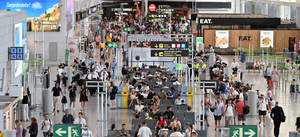
According to The Korea Herald on July 6, 2026, Malaga-Costa del Sol Airport in southern Spain has become a major gateway for the Costa del Sol. The article describes travelers moving through the airport with the ease of commuters in a well-run railway station.
The report also says Malaga-Costa del Sol Airport ranks as Spain’s fourth-busiest airport, after Madrid, Barcelona and Palma de Mallorca. Passenger traffic reportedly more than doubled over the past decade and topped 25 million travelers in 2025.
Those details matter because they show how a regional airport can become more than a local landing point. It can become a serious travel hub when air routes, passenger flow and regional access work together.
| Source-backed detail | What it says | Why Korea travelers should care |
|---|---|---|
| Source and date | The Korea Herald, July 6, 2026 | Use current travel reporting as a reminder to verify airport logistics before booking. |
| Country and airport | Malaga-Costa del Sol Airport, southern Spain | A city’s airport can shape the whole travel experience, not just the arrival moment. |
| Airport ranking | Spain’s fourth-busiest airport after Madrid, Barcelona and Palma de Mallorca | Secondary or regional airports can still be major gateways. |
| Passenger traffic | More than doubled over the past decade, topping 25 million travelers in 2025 | Rising passenger numbers can signal stronger routes, busier terminals and the need for better planning. |
| Travel category | Travel | The practical lesson is about trip planning, transfers and airport choice. |
What international readers should know
The Korea travel lesson is simple: your airport decision should include the “last mile.”
For visitors to Korea, the flight booking page may show only the airport and price. But your real journey includes immigration, baggage, transport tickets, payment method, luggage storage, weather, and the route to your first hotel or train station.
Before booking, check these points:
- Airport name: Make sure the airport is actually the one you intended to use.
- Arrival time: A cheap late-night arrival can become expensive if public transport is limited.
- Hotel location: Search the route from the airport to the hotel, not just the city name.
- Luggage route: Stairs, transfers and long walks matter if you carry large bags.
- Next destination: If you are leaving the city soon, check whether train or bus connections are easier than another flight.
- Payment and apps: Confirm how you will buy tickets or call transport after arrival.
This is not about avoiding one specific airport. It is about avoiding one specific planning error: treating the airport as the final answer.
Local context most people miss
Travelers often think of airports as a country’s front door. Locals think of them as part of a route.
That difference matters in Korea. A visitor may ask, “Which airport is cheapest?” A better local-style question is, “Which airport makes the whole route easier?”
For example, your best choice may depend on whether you are going straight to a hotel, meeting friends, attending a concert, catching a domestic connection, or traveling onward by train. The cheapest flight is not always the cheapest trip once you add time, stress and ground transport.
The Malaga example is useful because it highlights an airport becoming successful as a gateway. In travel terms, “gateway” means more than arrival. It means the airport helps people reach the region smoothly.
Use that same logic in Korea. Think in routes, not just airports.
What to check next
Before you book or depart, run this quick airport checklist. It takes a few minutes and can prevent the most common arrival-day problems.
- Search the exact airport-to-hotel route at the same time of day you will arrive.
- Check the final public transport departure if landing in the evening.
- Look for direct routes first when carrying luggage or traveling with children.
- Save your hotel address in Korean so you can show it at a counter or to a driver.
- Screenshot key information in case mobile data does not work immediately after landing.
- Confirm airport terminal details before leaving for departure.
Useful Korean phrase: “이 주소로 가 주세요.” It means “Please go to this address.” Keep the Korean address visible on your phone when using a taxi or asking for help.
What to verify before acting
For any Korea trip, verify transport details directly with official airport, airline or transport sources before you rely on them. Schedules, terminal assignments and late-night options can change.
For the Spain comparison used here, the factual basis comes from The Korea Herald article published on July 6, 2026. The article identifies Malaga-Costa del Sol Airport as Spain’s fourth-busiest airport and says its passenger traffic topped 25 million travelers in 2025.
What you should not do is make a Korea airport decision based only on a comparison with Spain. Use the Malaga case as a planning lesson, then confirm your actual Korea route with current official information.
FAQ
What is the main travel lesson from the Malaga airport story?
The main lesson is to plan the whole network, not just the flight. The airport, city access, onward transport and arrival time all affect the real cost and comfort of a trip.
Why does a Spain airport story matter for Korea travelers?
It matters because the planning mistake is universal. Whether you land in Spain or Korea, a cheap or convenient-looking flight can become stressful if the ground connection is poor.
What should I check before choosing an airport for Korea travel?
Check the exact airport, arrival time, route to your hotel, late-night transport, luggage burden, and your next destination. These details are often more important than saving a small amount on airfare.
Is the biggest airport always the best airport to use?
No. The best airport depends on your full itinerary. A smaller or different airport may work better if it connects more easily to your hotel, event venue or next city.
Where did the Malaga facts come from?
The Malaga facts come from The Korea Herald article published on July 6, 2026, “How Spain's one-network model helps Malaga take off.” The article discusses Malaga-Costa del Sol Airport in southern Spain and its growth as a travel gateway.


댓글
댓글 쓰기