Visiting Korea for STEM or School Research? Check This Seoul Science High Story First
Visiting Korea for STEM or School Research? Check This Seoul Science High Story First
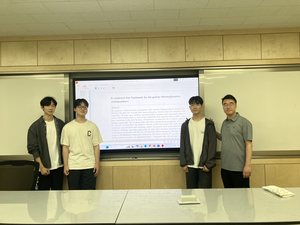
Before you book a campus visit, education tour, or Korea STEM itinerary, check what this story actually shows: Korea’s science-track schools can produce serious research, but that does not mean visitors can casually access labs, meet students, or arrange school tours without verification. A June 23, 2026 report highlights three Seoul Science High School students publishing black hole research in an international journal — a useful signal for anyone researching Korea’s education culture, science talent pipeline, or academic travel angle.
Why this matters now
If you are visiting Korea with a student, planning an education-themed trip, scouting exchange ideas, or writing about Korean STEM education, this is the kind of story that can save you from a shallow itinerary.
Many travelers know Korea for K-pop, food, beauty shopping, palaces, and transit convenience. Fewer know that Korea also has a highly visible science education track, including specialized high schools where teenagers may work on advanced topics.
The Korea Herald reported that three students at Seoul Science High School published a paper on black hole thermodynamics in the International Journal of Modern Physics D. The article was published on June 23, 2026, and the school described the achievement as rare for high school researchers working without university or outside institutional support.
For visitors, the practical takeaway is not “go there tomorrow.” It is: if your Korea trip includes education, science, school visits, youth competitions, or university scouting, verify access early and build your plan around official channels, not assumptions.
What’s happening in Korea?
The reported case centers on Seoul Science High School students Ahn Geon-woo, Jang Geun-young, and Bae I-jin, along with physics teacher Kwon Yong-joon. Their paper is titled “A Constraint-Free Formulation of Black Hole Thermodynamics from the Field Equations.”
The subject is not casual classroom science. It deals with the relationship between black hole thermodynamics and gravitational field equations. According to the report, previous studies often focused on changes in the outer event horizon while considering black hole volume. The students proposed a different approach by introducing changes in entropy into the field equations.
In plain English: this is a story about advanced theoretical physics being attempted by high school students in Korea. Whether you are a parent, student, educator, journalist, or science traveler, it gives you a reason to look beyond the usual tourist map.
| Source-visible fact | What it says | Why a visitor or researcher should care |
|---|---|---|
| Publication date | June 23, 2026 | Use this as the date marker when searching for follow-up coverage or school announcements. |
| Students involved | Three Seoul Science High School students | This is a youth STEM achievement, not a university lab announcement. |
| Teacher named in the report | Physics teacher Kwon Yong-joon | Shows the school setting included faculty guidance, though the report says no university or outside institutional support. |
| Journal | International Journal of Modern Physics D | Useful search term if you want to verify the paper directly. |
| Research topic | Black hole thermodynamics and gravitational field equations | Signals the level of academic specialization behind the headline. |
Number check: the source gives a few concrete numbers and dates, but they are not comparable data points. So instead of a chart, the table above focuses on what can be directly verified from the report.
What foreign visitors or residents should know
This story may matter to several types of people in Korea or planning to visit Korea.
Parents and students may use it as a search clue for Korea’s science high school system, STEM education culture, and student research environment. It does not prove that every school offers this level of research opportunity, so avoid generalizing too quickly.
Educators and school trip planners may find it useful when designing an itinerary around Korean education, but they should contact institutions directly. A news story is not an invitation, and school access in Korea can be limited, especially where minors are involved.
Science communicators and journalists can use the paper title, journal name, and student names as starting points for verification. The topic is technical, so any article, presentation, or interview request should be checked against the original paper and school confirmation.
Long-term foreign residents with children in Korea may find this story useful as a reminder that the Korean education landscape has specialized tracks. But admissions, eligibility, language, and curriculum details are not included in the report and must be checked through official school or education authority channels.
Local context most tourists miss
Korea’s education culture is often discussed internationally through test pressure, private academies, and university entrance competition. This story points to another layer: specialized academic environments where high school students may engage with unusually advanced material.
For a visitor, that means “education tourism” in Korea should not be limited to walking past famous universities or visiting bookstores in Seoul. If your trip has a learning purpose, you may want to research:
- science museums and public exhibitions that are open to visitors;
- university public lectures or science events, if available during your travel dates;
- school visit policies, only through official contact channels;
- student science fairs, public competitions, or science festivals that allow general admission;
- English-language availability before assuming you can participate.
The important caution: the source does not say Seoul Science High School is open for public visits, nor does it provide visitor information. Do not show up at a school expecting access. If you are building a trip around Korean education, verify first.
Quick checklist before you plan anything
- Search the paper title: “A Constraint-Free Formulation of Black Hole Thermodynamics from the Field Equations.”
- Check the journal: look for the paper in the International Journal of Modern Physics D.
- Verify the date: the Korea Herald article is dated June 23, 2026.
- Do not assume school access: contact the school or relevant institution before planning a visit.
- Protect minors’ privacy: if you are a creator, journalist, or researcher, use official communication channels.
- Separate inspiration from policy: this story does not explain admissions, curriculum, visas, exchange programs, or school tour rules.
- For family relocation decisions: check official education information, school eligibility, language requirements, and residence rules separately.
Useful Korean phrase
If you need to ask whether a school or institution has public visitor information, this Korean phrase may help:
방문 가능 여부를 확인하고 싶습니다.
Bangmun ganeung yeobureul hwaginhago sipseumnida.
“I would like to check whether visits are possible.”
For email, you can add:
공식 방문 절차가 있나요?
“Is there an official visit procedure?”
FAQ
Can foreign tourists visit Seoul Science High School?
The source article does not provide visitor access information. Because this is a high school, do not assume public access. Check directly with the institution or relevant official channels before making plans.
Is this a university research paper?
The report says the paper was published by three Seoul Science High School students and describes the achievement as rare for high school researchers working without university or outside institutional support.
What is the paper about?
According to the report, it examines black hole thermodynamics and gravitational field equations. It specifically discusses a new approach involving changes in entropy rather than volume.
Why should travelers care about a physics paper?
Most general travelers may not need to. But if your Korea visit involves education, STEM, student research, school comparisons, academic exchanges, or science storytelling, this gives you a concrete search lead.
Does this mean Korea is the best place for high school science research?
The source does not support that broad conclusion. It reports one rare achievement at one school. Use it as a signal to investigate further, not as proof of an entire education system.
Why this is credible — and what still needs checking
The core facts in this article come from The Korea Herald report dated June 23, 2026. The source identifies the school, the three students, the teacher, the paper title, the journal, and the research topic.
What still needs verification: school visit rules, admissions information, exchange opportunities, event access, language support, and any travel-related arrangements. None of those are confirmed in the source article.
Do not make a travel booking, school visit request, relocation decision, or education plan based only on a news article. Use the report as a starting point, then verify through the school, the journal, or official education sources.
Useful links
- Original source: The Korea Herald article


댓글
댓글 쓰기