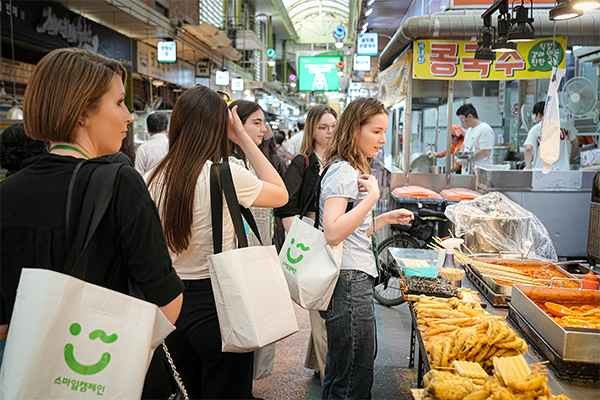
Korea’s “Smile Campaign” Aims to Make Traditional Markets Easier for Foreign Travelers
Korea’s traditional markets are some of the best places to try local food, buy souvenirs, and experience everyday Korean culture. A new tourism service campaign is focusing on making selected markets more visitor-friendly through clearer prices, card payment options, cleaner facilities, and friendlier customer service.
What's happening in Korea?
The Ministry of Culture, Sports and Tourism and the Korea Tourism Organization are working with eleven traditional markets across Korea as part of a “Smile Campaign” for K-tourism.
The campaign is designed to improve the shopping experience for both local and international visitors. Participating markets are expected to focus on four main service areas:
- Fixed pricing so visitors can shop with more confidence
- Card payment acceptance where available, making purchases easier for travelers
- Cleanliness and hygiene management, especially important for food stalls and dining areas
- Friendly service to help visitors feel more welcome
According to VISITKOREA, eleven traditional markets are taking part nationwide. Travelers should check the official source for the latest participating market list and details before visiting.
Why this matters for foreigners
Traditional markets are fun, but they can sometimes feel confusing for first-time visitors. Prices may not always be clearly displayed, some stalls may accept only cash, and communication can be difficult if you do not speak Korean.
This campaign matters because it directly addresses common concerns foreign travelers have when visiting markets in Korea:
- Less price anxiety: Clearer or fixed prices can make shopping feel more comfortable.
- Easier payment: Card acceptance is useful for travelers who do not carry much cash.
- Better food confidence: Cleanliness efforts can make street food and market dining feel more approachable.
- More welcoming atmosphere: Friendly service can help visitors enjoy the experience, even with language barriers.
For tourists who want a more local experience beyond shopping malls and department stores, this is a good reason to add a traditional market to the itinerary.
Cultural or practical context
Traditional markets, called sijang in Korean, are an important part of daily life in Korea. They are often packed with food stalls, produce shops, seafood vendors, clothing stores, snack stands, and small restaurants.
Popular market foods may include:
- Tteokbokki — spicy rice cakes
- Hotteok — sweet filled pancakes
- Gimbap — seaweed rice rolls
- Bindaetteok — mung bean pancakes
- Eomuk — fish cake skewers
- Jeon — Korean savory pancakes
Unlike modern supermarkets, traditional markets can feel more lively and informal. Some vendors may call out to customers, offer samples, or expect quick decisions when the stall is busy. This can be part of the charm, but it may also feel overwhelming for new visitors.
The “Smile Campaign” appears to be part of a broader effort to make these spaces easier for tourists while keeping their local character.
What foreigners should know
- Bring some cash anyway. Even if card payments are encouraged, not every stall may accept international cards.
- Look for displayed prices. Fixed pricing is one of the campaign goals, but practices can vary by market and vendor.
- Go during meal times for the best food atmosphere. Lunch and early evening are often lively, though weekends can be crowded.
- Use translation apps. Papago or Google Translate can help with menus, prices, and simple questions.
- Be patient in busy stalls. Many market vendors work fast, especially during peak hours.
- Check opening hours before visiting. Some markets have different hours depending on the day, season, or type of shop.
- Confirm the latest information from official sources. Campaign details, market participation, and services may change.
If you are visiting Korea for the first time, a traditional market can be a budget-friendly way to eat well and experience local culture. It is also a good place to buy simple souvenirs such as snacks, tea, socks, kitchen items, or packaged foods.
Useful Korean phrases
Here are simple Korean phrases that can help at traditional markets:
- 얼마예요? — How much is it?
- 카드 돼요? — Do you accept card?
- 현금만 돼요? — Is it cash only?
- 이거 하나 주세요. — Please give me one of this.
- 포장해 주세요. — Please pack it to go.
- 맵지 않게 해 주세요. — Please make it not spicy.
- 추천해 주세요. — Please recommend something.
- 감사합니다. — Thank you.
Tip: If pronunciation is difficult, showing the Korean text on your phone usually works well.
FAQ
Are Korean traditional markets good for foreign tourists?
Yes. They are great places to try Korean street food, see local shopping culture, and find affordable items. Some markets are easier for tourists than others, so it helps to check visitor information before going.
Can I use a credit card at traditional markets in Korea?
Some stalls accept cards, but not all. This campaign encourages card payment acceptance at participating markets, but travelers should still carry some Korean won in cash just in case.
Do traditional markets have fixed prices?
Many food stalls and shops display prices, but the experience can vary. The campaign is promoting fixed pricing to make shopping clearer and more comfortable for visitors.
Is bargaining common in Korean traditional markets?
Bargaining is not as common as some travelers expect, especially for food. For clothing, souvenirs, or bulk purchases, some small discounts may be possible, but it is best to be polite and respectful.
Are traditional markets clean and safe for eating?
Many visitors enjoy market food without issues, and cleanliness is one of the focus areas of this campaign. As with any food travel experience, choose busy stalls, check how food is handled, and use your own judgment.
Where can I find the full list of participating markets?
Check the official VISITKOREA article and related Korea Tourism Organization updates for the most current list and details.
