Working Outside in Korea’s Summer Heat? Check This 2,400-Kit Safety Signal Before You Start
Working Outside in Korea’s Summer Heat? Check This 2,400-Kit Safety Signal Before You Start
Save this before you make the same Korea mistake many newcomers make once: treating summer heat as just “uncomfortable” instead of a real work and commute risk. If you are a foreign worker, student with a part-time job, delivery rider, caregiver, cleaner, construction helper, or anyone moving around the city for work, Korea’s heatwave season can affect your health, schedule, and safety. A July 8, 2026 Korea news signal about KB Kookmin Bank expanding support for mobile workers with 2,400 health and safety kits is a useful reminder to prepare before the hottest days hit.
Quick answer: If your work in Korea involves outdoor movement, delivery, commuting between sites, or long time away from air-conditioned spaces, prepare a heat-safety kit, check your employer’s safety guidance, and verify any worker support programs through official or direct sources before relying on them.
What changed and why it matters today
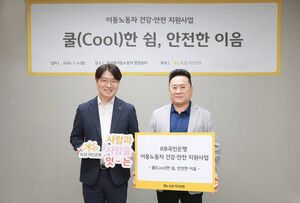
On July 8, 2026, a Korea News item surfaced through Naver News Korea Life Signals under the search context of “foreign employment in Korea”. The visible source title says: “KB국민은행, 폭염 속 이동노동자 지원 확대…건강·안전키트 2400명 전달”, meaning KB Kookmin Bank expanded support for mobile workers during extreme heat and delivered health and safety kits to 2,400 people.
For international readers, the important point is not only the bank name. It is the local signal: in Korea, heatwave safety is becoming a practical workplace issue, especially for people whose jobs involve movement rather than sitting in one fixed office.
This matters because many foreigners in Korea search for jobs first and safety conditions later. But in summer, the order should be reversed: before accepting shifts or starting field work, check how heat, hydration, rest, insurance, and emergency contact procedures are handled.
| Key fact | What is known from the source signal | Why it matters for foreign residents |
|---|---|---|
| Date | Published signal date: July 8, 2026 | Summer heat safety is a current Korea life and work issue. |
| Country | South Korea | Relevant to foreign workers, students, and residents working in Korea. |
| Main entity | KB Kookmin Bank / KB국민은행 | A major Korean financial institution is linked to worker support activity. |
| Support count | Health and safety kits for 2,400 mobile workers | The number shows the support was not just symbolic or individual. |
| Topic category | Jobs in Korea / Korea News | Useful for people searching employment and settlement information. |
| Search context | Naver News signal for “외국인 취업 한국” | Matches foreigner interest in Korean jobs, hiring news, and employment rules. |
This table does not mean every foreign worker will receive a kit. It means the topic is worth watching and verifying, especially if your work puts you outside during Korea’s heatwave season.
The mistake foreign readers could make here
The easy mistake is to read a headline about “support” and assume help will automatically reach you. In Korea, workplace support often depends on who your employer is, where you work, what type of contract you have, and whether the program is run by a company, local government, union, platform, or partner organization.
Another common mistake is underestimating the Korean summer. Even short-distance work can become physically draining when you combine heat, humidity, subway transfers, hills, delivery routes, protective clothing, or long waiting times outside.
Reader question: “Does this mean foreign workers in Korea can get a heat-safety kit?”
Direct answer: Not automatically. The source signal confirms a 2026 news item about KB Kookmin Bank delivering health and safety kits to 2,400 mobile workers, but eligibility, locations, distribution partners, and application details must be checked through the original article or related official channels.
If you are applying for jobs in Korea, do not stop at pay, visa, and working hours. Ask how the workplace handles summer heat, breaks, water access, indoor rest, and emergency procedures.
What to do before you act on this
If you saw this news while searching for “foreign jobs in Korea,” use it as a preparation trigger. Before accepting outdoor or mobile work, ask practical questions that are easy to overlook during hiring.
- Ask about rest breaks: Are there scheduled breaks during extreme heat?
- Check water access: Will you be able to carry or refill water during the shift?
- Confirm indoor shelter: Is there a place to cool down between tasks?
- Clarify emergency contact: Who do you call if you feel dizzy, weak, or sick?
- Check language support: Are safety instructions available in a language you understand?
- Verify contract details: Do not rely only on a verbal explanation.
For students and new residents, this is especially important. Part-time jobs can look simple on paper, but commuting, uniform requirements, standing time, and summer conditions can change the real difficulty of the job.
Local context most people miss
In Korea, the phrase 이동노동자 roughly means “mobile workers” or workers who move around as part of their job. This can include people whose work is not tied to one desk or one indoor workplace. The source title uses this term, which is why the news is relevant beyond one company’s social contribution activity.
Foreign residents may also miss how Korea’s job and life systems overlap. A news item about a bank may still matter to workers because financial institutions in Korea often appear in settlement-related services, worker support, financial education, fraud prevention, or community programs. The candidate summary also mentions services linked to finance and communication for Mongolian workers and students entering Korea, plus education topics such as industrial safety, financial fraud prevention, and basic finance education from another financial group.
That does not mean every service is available to every nationality or visa type. It does mean foreign workers should pay attention to non-government support channels as well as official immigration and labor information.
Save this quick checklist
Use this before you accept a summer job, delivery shift, field assignment, or work that requires moving between places in Korea.
- Weather: Check the daily heat level before leaving home.
- Water: Carry water before your shift starts, not after you feel thirsty.
- Rest: Know where you can cool down between tasks.
- Phone: Keep your phone charged in case you need help or directions.
- Documents: Keep your workplace contact and basic ID information accessible.
- Language: Save one Korean phrase for heat-related illness.
- Verification: If a support program is mentioned, check who runs it and who is eligible.
For job seekers, add one more step: screenshot the job posting and keep messages about working hours, location, and conditions. This is not about distrust; it is about avoiding confusion later.
Useful Korean phrase
“더위 때문에 어지러워요. 잠깐 쉴 수 있을까요?”
This means: “I feel dizzy because of the heat. Can I rest for a moment?”
It is simple, direct, and useful if you are working, commuting, or asking for help in a store, workplace, station, or public area.
What to verify before relying on any support program
Before you assume you can receive a kit, service, or education program, verify the details from the original source or the organization directly. Look for these points:
- Who is eligible: mobile workers, foreign workers, students, specific nationality groups, or partner organizations
- Where it applies: nationwide, Seoul, a specific city, a workplace, or a partner center
- How support is delivered: direct distribution, employer channel, community group, or event
- What is included: health kit, safety items, education, finance help, communication service, or fraud prevention guidance
- Whether registration is needed: some programs may require prior sign-up or referral
For visa, employment rights, health, and workplace safety decisions, use official Korean government or employer-confirmed information before acting. News signals are useful for awareness, but they should not replace official confirmation.
FAQ
Is this only for Korean workers?
Not necessarily, but the visible source title only confirms support for 2,400 mobile workers during extreme heat. Foreign readers should check the original article or program organizer to confirm whether non-Korean workers are included.
Why is this relevant to foreigners looking for jobs in Korea?
Because the signal appeared in a Naver News search context related to foreign employment in Korea. It points to a practical issue many job seekers miss: workplace safety during Korea’s hot summer months.
Does KB Kookmin Bank provide jobs through this program?
The provided source signal does not say this is a hiring program. It is about expanded support and delivery of health and safety kits, so do not treat it as a job posting.
What should I ask before taking outdoor work in Korea?
Ask about breaks, water access, rest areas, emergency contacts, working hours, and written contract terms. These details can matter as much as hourly pay during heatwave season.
Can students in Korea use this information?
Yes. International students with part-time work should use this as a reminder to check safety conditions, especially if the job involves commuting, standing, delivery, moving goods, or working outside.
Useful links
Why this is credible: The core facts in this article come from a Naver News Korea Life Signals candidate item collected on July 8, 2026, pointing to a Korean news article about KB Kookmin Bank, extreme heat, mobile workers, and 2,400 health and safety kits. Practical advice in this post is an editorial checklist for foreign residents and job seekers; eligibility, distribution, and program details should be verified from the original article or the organization involved.
Next action: If you work or plan to work in Korea during summer, save the checklist above and verify the original Korean article before assuming you qualify for any support. For employment, visa, health, or safety decisions, always confirm details with the employer, program organizer, or official Korean authority.


댓글
댓글 쓰기