U.S. 4-Year Student Stay Limit in 2026: What Students in Korea Should Check Before Choosing a Long Program
If you are studying in Korea and considering a U.S. degree, exchange, or research program, a four-year stay limit could affect more than your departure date. The biggest risk is accepting a long academic program without knowing whether previous U.S. study, research delays, or extra semesters count toward that period. This guide will help you map your timeline and ask the right questions before you commit to a program.
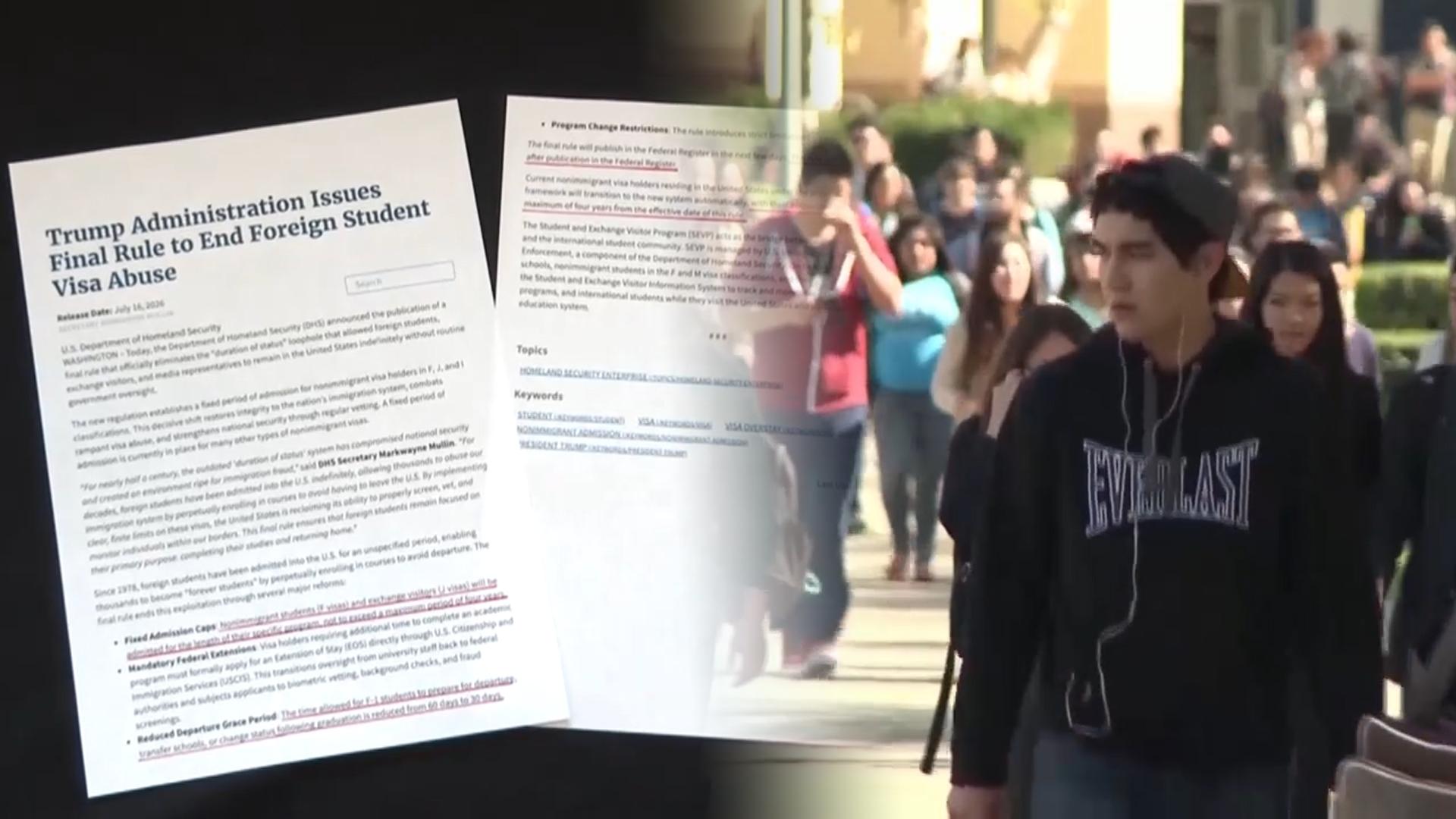
A Korean news report published on July 17, 2026 describes a four-year limit on stays by international students in the United States. It does not provide enough detail to show that every student category, current enrollee, or extension request would receive the same treatment. For now, the safest approach is to compare the reported limit with your full study plan rather than assuming that the four years shown on a university brochure settle the issue.
Who needs to pay attention to the four-year limit?
A one-semester exchange student and a doctoral student do not face the same planning problem. Four years may appear generous for a short exchange, but it becomes a serious consideration when a degree already takes close to four years on paper.
You should pay particular attention if you are planning:
- a U.S. degree expected to take four years or longer;
- a research program with an uncertain completion date;
- an exchange followed by another period of U.S. study;
- a program that includes required training or additional academic work;
- a transfer between U.S. schools or programs; or
- travel with accompanying family members.
This is easy to miss when admission, tuition, housing, and scholarships already demand your attention. But if your expected graduation date sits close to an immigration limit, even a normal academic delay could become important.
The report says approximately 12,000 Korean students were staying in the United States in the previous year. It also notes that the affected Korea-connected population would be larger when accompanying family members are included. That number does not tell you how an individual case will be handled, but it shows why the issue matters to students planning from Korea.
“Four years” is not enough information to plan your stay
The headline refers to a student visa limit, but students need to distinguish between several dates: the validity of a visa document, the date of entry, the academic program period, and the period a person is authorized to remain in the country. Those dates are related, but they are not automatically identical.
The news report also leaves several practical questions unanswered. It does not establish when the reported rule would take effect, whether it would apply equally to new and existing students, or what process might be available for a degree requiring more time.
For a student applying from Korea, these are the questions that matter most:
| Your situation | Why four years could matter | What to ask |
|---|---|---|
| Short exchange from a Korean university | The exchange itself may be short, but previous or later U.S. study could become relevant. | Would separate study periods count toward one total? |
| Degree lasting close to four years | Research, course changes, or graduation requirements could extend the timeline. | What happens if the degree cannot be completed within four years? |
| Student already enrolled in the United States | Existing students may need different guidance from first-time applicants. | Are current students covered, and are there transitional rules? |
| Student traveling with family | Family members may have status dates linked to the student’s stay. | How would the student’s end date affect accompanying dependents? |
Build this timeline before accepting an offer
Do not begin with the four-year number. Begin with your real academic timeline, including the parts that are easy to leave out.
- Write down your expected entry and graduation dates. Use the dates for your actual program, not only the academic year shown in promotional materials.
- Add orientation, required research, training, and graduation procedures. A course end date may not be the final date relevant to your stay.
- List any previous U.S. study periods. Include exchanges or other academic stays, then ask whether they would count toward the reported limit.
- Allow for a realistic delay. Consider what would happen if research, a transfer, or an academic requirement extended the program.
- Mark any major financial decision. Identify when you must accept the offer or make a non-refundable commitment, and obtain current guidance before that point.
Once the timeline is ready, send it to the prospective university’s international student office. A precise question such as “My expected study period is from this date to this date; how would the reported four-year rule apply?” is more useful than asking whether the policy is generally a problem.
Request the answer in writing and keep it with your admission records. That sounds like a small administrative step, but it gives you a clear reference if the guidance changes before departure.
How to respond without abandoning your U.S. study plan
The reported change does not mean every student in Korea should avoid studying in the United States. A short exchange may fit comfortably within the reported period, while a longer research or degree route requires closer planning.
Use the four-year figure as a screening question:
- If your planned stay is clearly shorter, identify whether previous study time changes the calculation.
- If your program approaches four years, ask how academic delays and completion requirements are handled.
- If the program is expected to exceed four years, request a written explanation of any renewal or extension procedure before accepting.
- If you are already enrolled, ask specifically whether the rule applies to existing students or only later entrants.
The important part is not the headline itself, but whether your planned dates fit the rules that apply to your student category. Do not cancel an offer or change your academic route based only on a news headline.
Questions students in Korea are likely to ask
Does the reported U.S. limit change my student status in Korea?
No direct change to Korean immigration status is described in the report. Your permission to study or remain in Korea is governed separately by Korean rules. The reported issue matters when you apply to enter or study in the United States.
Does “four years” mean every student automatically receives four years?
The report does not establish that. The period granted in an individual case can depend on the final rule and the student category involved. Treat four years as the reported ceiling that requires further clarification, not as a guaranteed period for every applicant.
Could a previous U.S. exchange count toward the limit?
The available report details do not answer this. If you have studied in the United States before, include those dates when contacting the international student office rather than assuming the calculation starts again with a new program.
What to do before paying a deposit or changing your plans
The confirmed details used here come from a Yonhap News TV report dated July 17, 2026. The report describes a four-year limit and says about 12,000 Korean students were staying in the United States in the previous year, excluding the larger total created by accompanying family members.
The original article is credible for understanding the reported policy development and its scale in Korea. It is not a substitute for the final U.S. government language or guidance for your individual category. Before making an irreversible decision, compare the news with current instructions and a written answer from your prospective school.
Your next step: Open the Yonhap News TV report on the four-year U.S. student stay limit, save the five-step timeline above, and email your university with your planned entry date, expected graduation date, previous U.S. study periods, and student category.


댓글
댓글 쓰기